The solution is in the rhythm
- harrisonsaito6
- Dec 19, 2022
- 3 min read
i'm feeling quite abstract today in my thoughts.
Our body feels so much yet our brains think so much, every second we are awake. We should be trying to find synchronicity. But how? We need to understand how we learn. Humans learn an 'epiphany'. Until you feel that, most of the times, we just forget what we learnt. How you habitualise and truly internalise that learning is dependent on how often you repeat what you are trying to fully make yours.
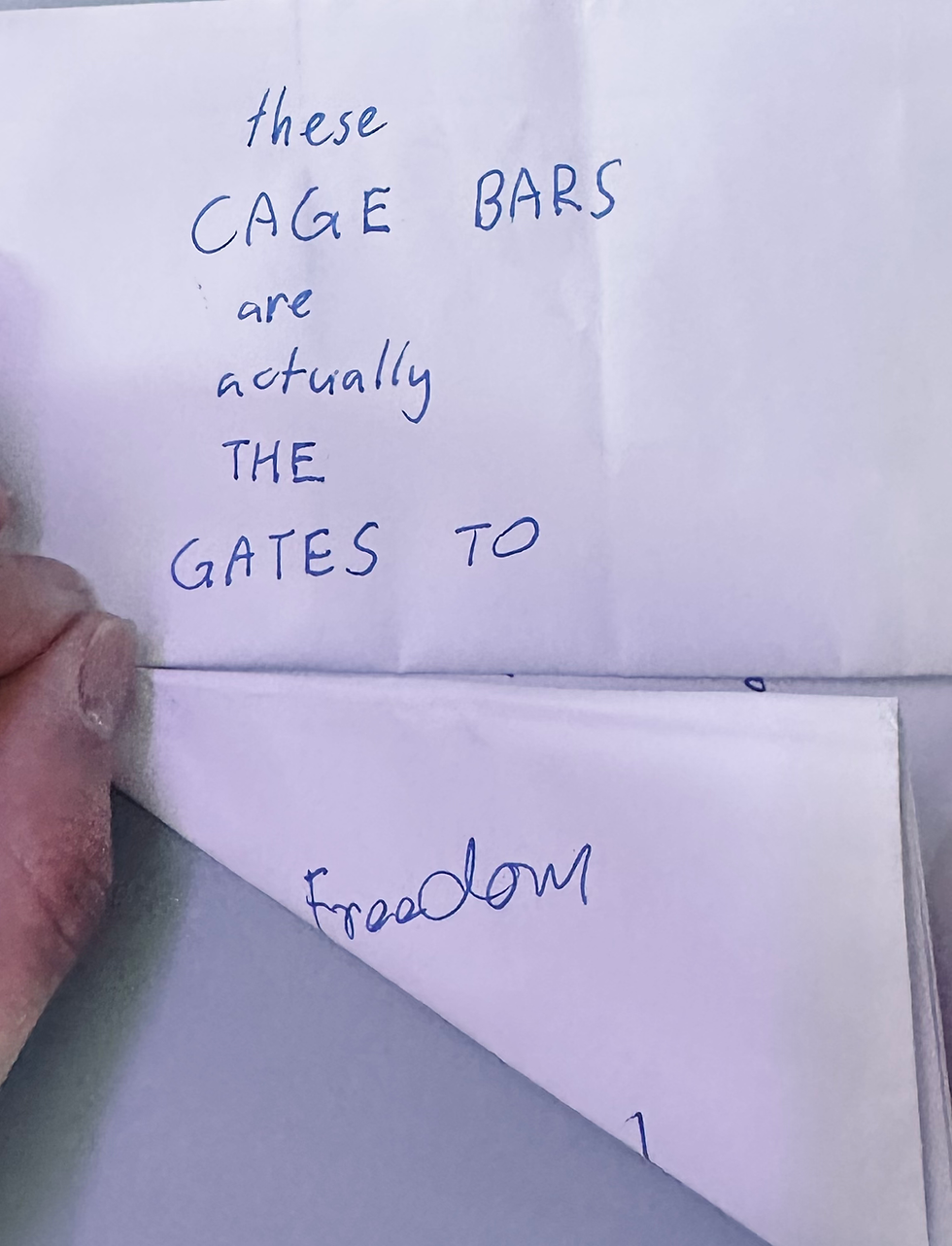
We need to continuously eliminate distractions. We need to slow down to understand what the distractions even are. Eastern philosophy is correct; flow. Whatever stops the flow, we need to identify and remove the obstruction. True 'freedom' is not being out of the cage and thinking about how great you are BECAUSE of the cage (past fear or future anxiety of going back into the cage). True freedom is not even thinking about the cage again. Your life is never dictated by the depressing or anxious fear of having a cage to have meaning in your life.
Feeling at peace, being in-sync, all of this is dependent on a very abstract 'feeling': rhythm. Anyone who stays in their craft long enough, understands what a rhythm feels like. We ALL have a rhythm. People with anxiety have a rhythm. Teenagers at school have a rhythm. An office worker has a rhythm. We all have rhythms. The issue is, many of us don't know our own rhythm. Some rhythms are too long, too complicated to understand and ride. We need to UNDERSTAND our rhythm first to CHANGE our rhythm and gain agency: optimisation. Waves in the sea, the engine in your car, the beat of your heart, the fighters in the UFC, the pianist, your office colleague's typing, there is a rhythm. We are creatures of habit/rhythm.
We need to simplify. Our emotions SHOULDN'T set our rhythm. Too many of us are based on our emotional state to dictate. No. Once we master the rhythm and we can get into the zone, we have something to fall back on. The transition should be quick. This can be done through experience and taking on many challenges; the process of falling down and getting back up.
Don't forget, our rhythm is INEVITABLY broken. Don't cling to the rhythm. Rather, practice getting back into rhythm often. So when the wave breaks you off your board, you can get back up and find it again. It's all in the feeling. It's all in the thought. Master both.
Rhythm and routine go hand in hand, the feeling of rhythm is gained from a routine. Many people's rhythm, comfort (all these words are quite synonymous if you think about it) is thwarted by something like eye contact with a stranger. I understand we all have our triggers. Are you aware of the signs your body tells you when your rhythm is broken? Many of us tense our shoulders and neck, we hold our breath, all of which are signs of disrupted rhythm. Our rhythm can and most likely can be broken at any second of the day. And that's okay.
As a martial artist, there is an obvious opponent when you spar. In reality, there is always adversaries too. When you spar, a good, experienced fighter will try to observe the other person's rhythm. Who can disrupt their rhythm? Most beginners have a rhythm too, acquired from their experiences in their lives. But they aren't aware of their rhythm, it is too complex, irregular and disjointed.
Are our rhythms optimised? Most likely not. Just because we feel like we are in rhythm, in comfort, in control does not mean it is optimal for us. Our rhythm is often optimised through what we want/desire.


Comments