You understand your patterns, and you still repeat them.
Share · Movement 01
The Workshop · 3 seats · Chatswood, Sydney
Your first reaction may be automatic. What you do next doesn’t have to be. The workshop is one room, three people and one hour with Harrison — learning to notice the moment in between: what you are feeling, what set it off, and what you would rather do next. The first practice of Return to Self, before you commit to any of it.
Two rooms: Saturday 3 or Sunday 4 October · 1–2 pm

What people noticed afterwards
These are the changes people who trained with Harrison say they noticed — as written to him, or said on camera. The workshop hands you the first practice behind them.

JohnConsultant, 55

AndrewDrummer

JamesConstruction

JakeMusician
Filmed giving their testimonies, September 2026
What happens in the room
That moment can be very small. With practice you begin to notice it — and when you can notice it, you can choose something different. One session, four movements, in the order that makes each one land. No experience needed.
01 Share
It begins with the three of you and Harrison, and a simple question: what are you navigating right now, and what would you like to understand better? Say as much as you want. Nobody performs, and nobody is watched.
02 Breathe
Breath and stance, taught the way the dojo teaches them: used deliberately to change what the nervous system is doing — the part of you that decides whether to brace or settle, which does not take instructions in English.
“The biggest tool that helps me is regulation. I’ve got to regulate my state.”
Harrison, on tape, 26 Aug 2026
03 Sit
A guided meditation drawn from the Japanese and Shingon Buddhist practice Harrison was ordained into in 2014. Not about removing difficulty — the pressure still exists. Practice changes the way you meet it: you learn to notice what you feel, then decide what deserves your attention, and what does not.
04 Take home
The room closes with release and gratitude, and you leave with one practice for the week after — not a folder. If the twelve weeks are yours, this was week one in miniature. If they are not, you still have the practice.
Not therapy, and not about becoming endlessly calm. Practice — so that what you feel does not automatically make your decisions for you.
Apply for a seat
Who is holding the room
“My dad’s 81. I only really started talking to him three years ago.”
Harrison, on tape, 26 Aug 2026
The conversation he asks people to have is one he had first.
In their words
“people outside of my karate environment have noticed that difference of me being a lot more calmer as a person”
JohnConsultant, 55 · filmed
“how I use that in my day to day, makes me happier, makes me calmer, I think it makes me a better person”
AndrewDrummer · filmed
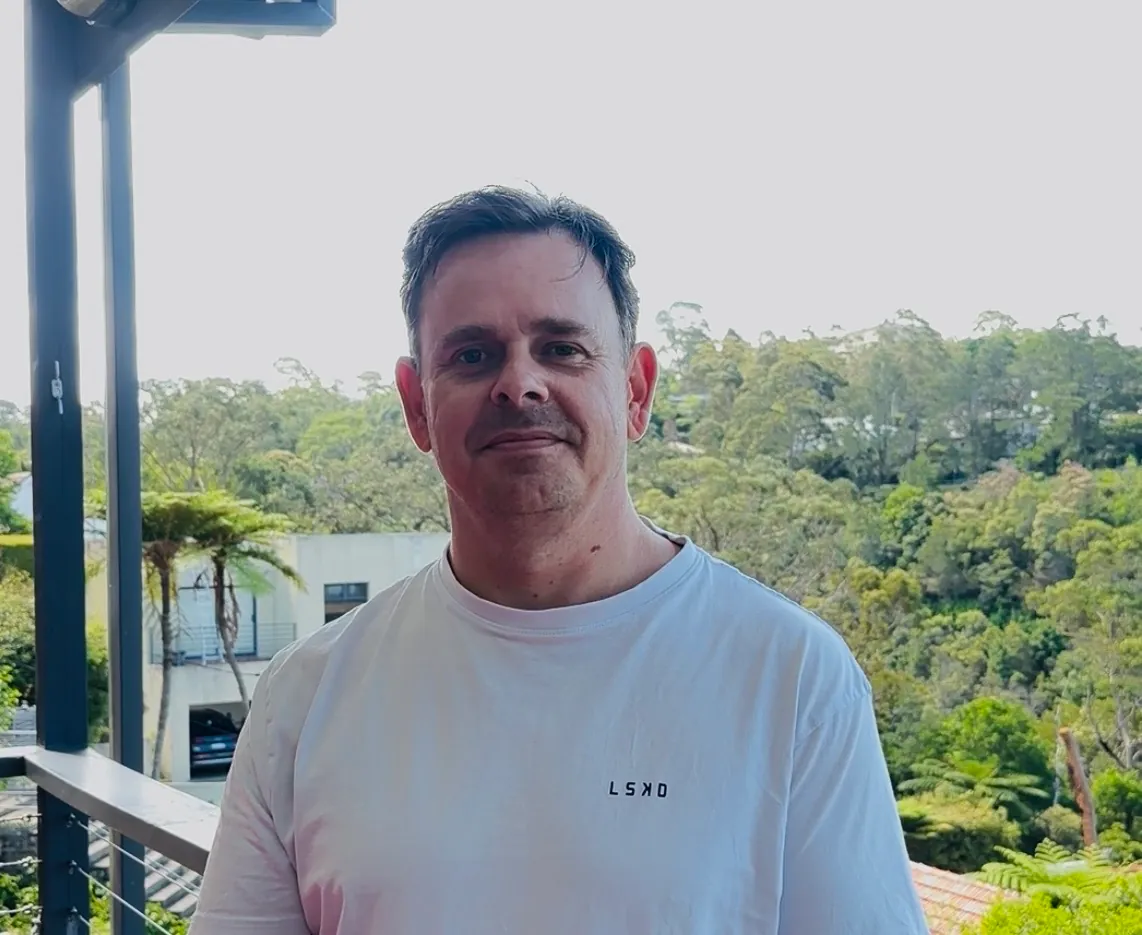
“Harrison helped me remove the mask, calm the mind, and move with intention rather than just speed, power, and grit.”
Matt HalpinCoaching · Return to Self
Quoted as written to Harrison, or as said on camera, under the name of the person it came from.
Straight answers
Because three seats have to be the right three. Harrison reads every application himself and calls you first — a short conversation, so the room works for everyone in it. Nothing to prepare.
No. You will hear what Return to Self is, because people ask. You will not be pitched. If you want the twelve weeks afterwards, you ask; if you do not, the workshop was the workshop.
You are never required to disclose more than you choose, or to prove yourself through an exercise. The first movement is a conversation; how much of it is yours to say is yours to decide.
No. This is coaching — a training framework for the inner world, built on martial arts, Buddhism and honest self-inquiry. It is not therapy, diagnosis or emergency care, and it is not a replacement for any of them. If you are in crisis, contact Lifeline on 13 11 14.
Ask and Harrison will answer directly — nothing on this page is a pitch, and applying costs nothing. Nothing is charged until you have a confirmed seat.
No. Karate is used as a method for working with the nervous system, attention and pressure. Plenty of people arrive having never trained. The physical practice is adapted to the person in front of me.
You are first for the next room. Rooms run as three people apply for them, so an application is never wasted.
Three seats
Pick a session and leave your details, and your spot is under review. Harrison reaches out directly — you choose the window for his call. Three seats a room; if yours is full, you are first for the next.
Two rooms: Saturday 3 or Sunday 4 October · 1–2 pm
Apply — under a minute
Your spot is under review, and Harrison will reach out directly. Pick up to three windows for his call.
When can he call?
Sydney time · two-hour windows · up to three